Spunlace Non-Wovens
Flexible, absorbent materials for industrial cleaning and wiping
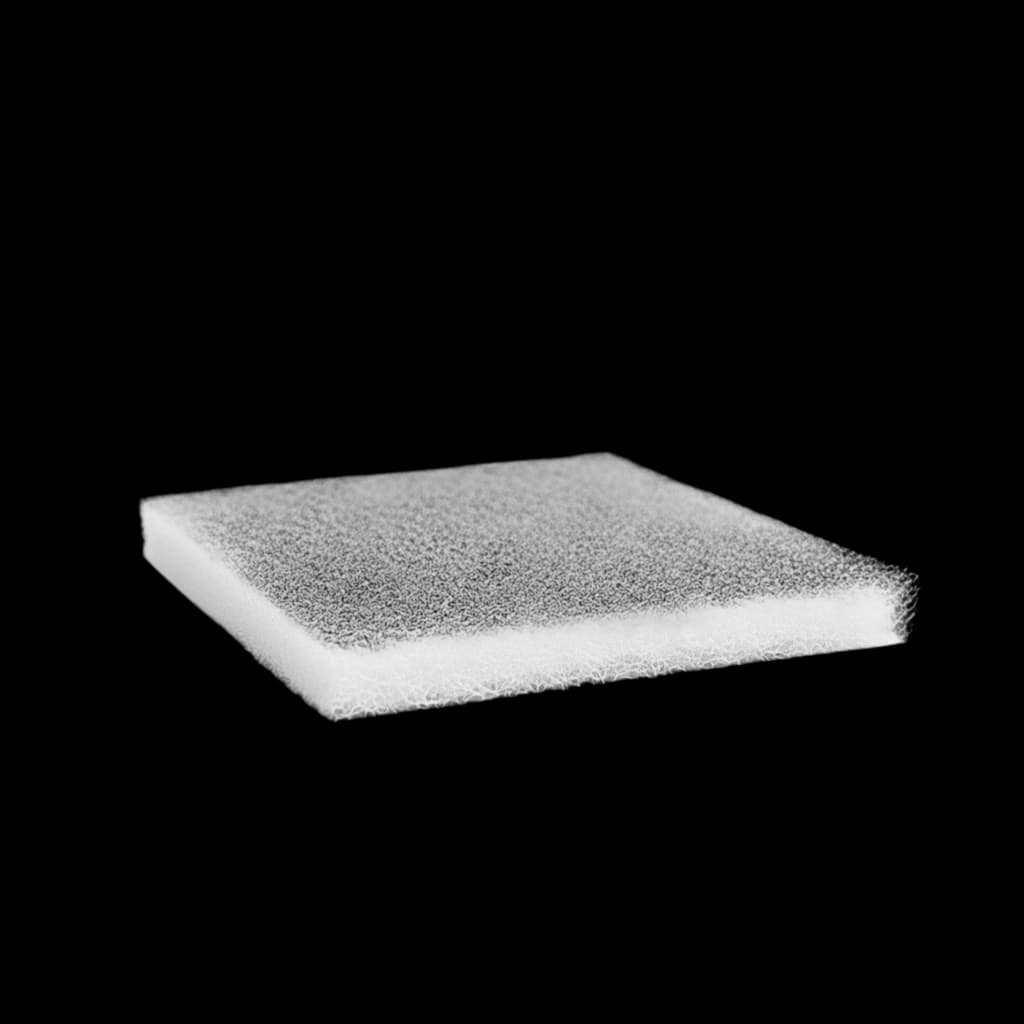
Material Characteristics (Application-Dependent)
Our core materials are spunlace and needle-punched non-woven fabrics.
Depending on the intended application, these materials may be supplied with specific functional characteristics to support performance requirements.
These characteristics are not standalone products and are evaluated during application review and requirement alignment.
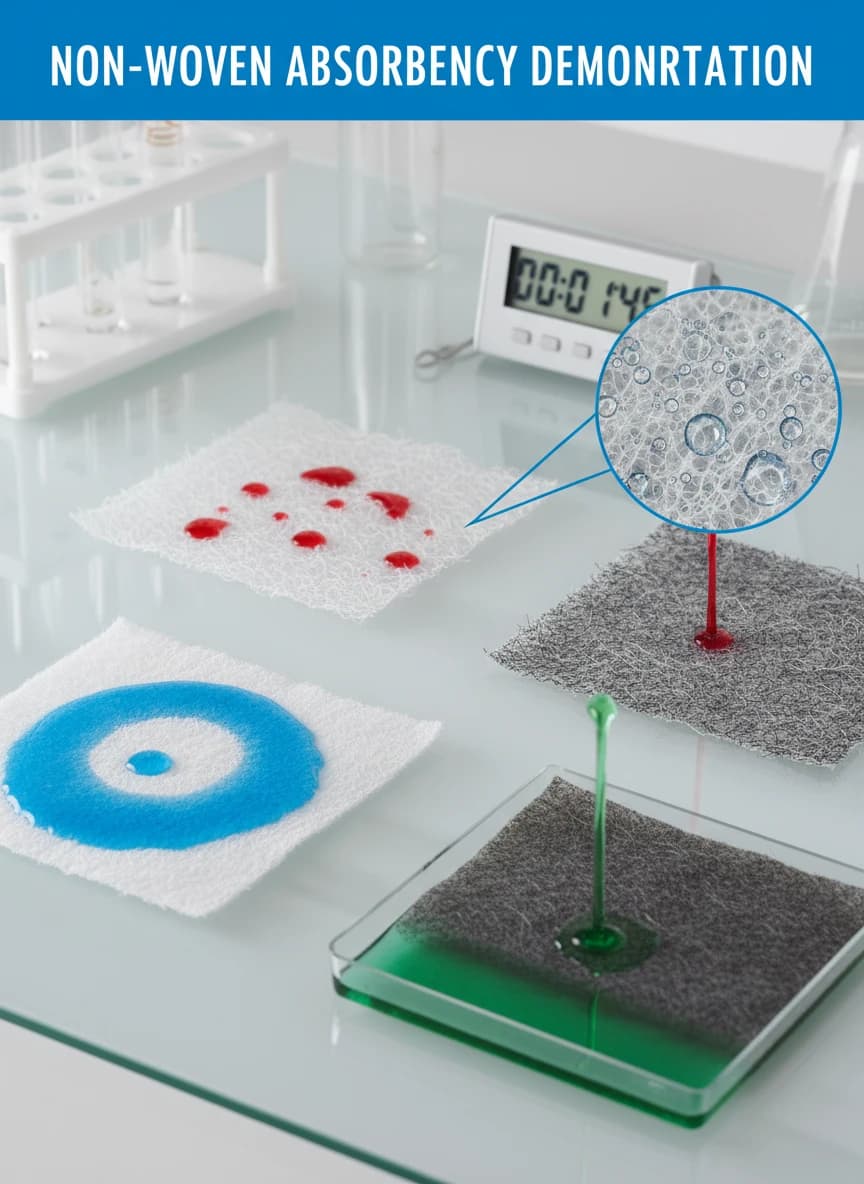
Absorbency Behavior
Absorbent behavior in industrial non-wovens is primarily influenced by fiber selection. Cellulose-based fibers such as viscose are typically used where liquid absorption is required, while synthetic fibers such as PP and PET are selected where resistance, durability, or controlled fluid interaction is preferred.
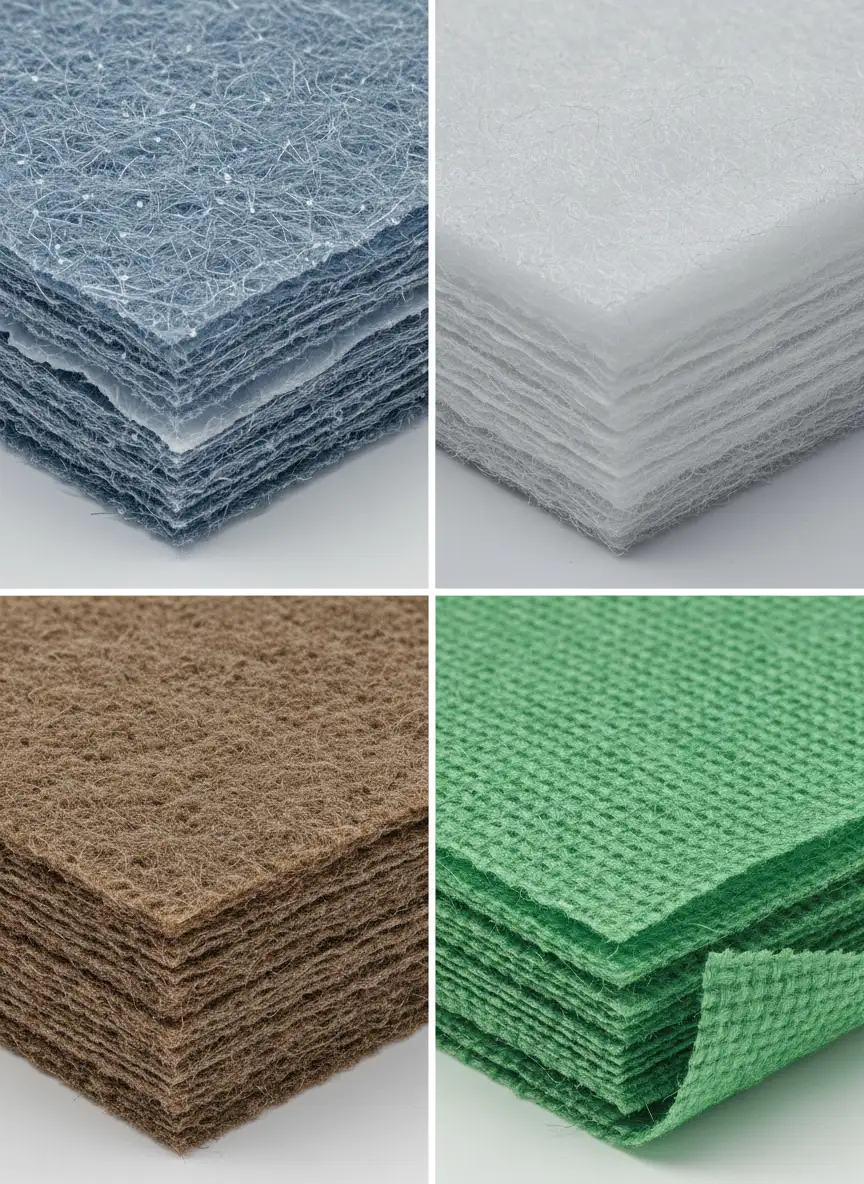
Surface & Layer Configuration
In certain applications, laminated constructions may be evaluated where barrier performance or layered functionality is required. Such configurations are considered case-by-case, subject to feasibility.
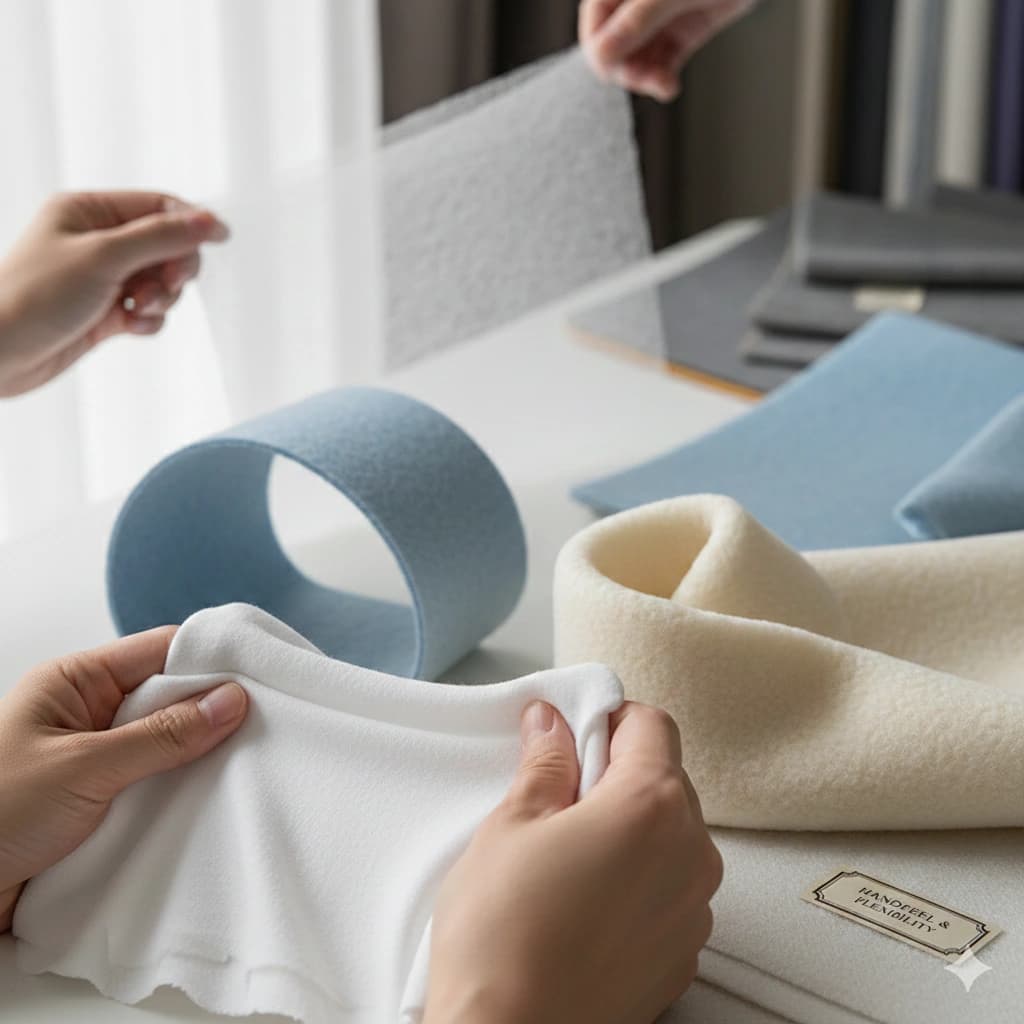
Hand-Feel & Flexibility
Softness and flexibility are influenced by fiber selection and process parameters. These attributes are discussed where handling comfort or surface interaction is relevant to the application.
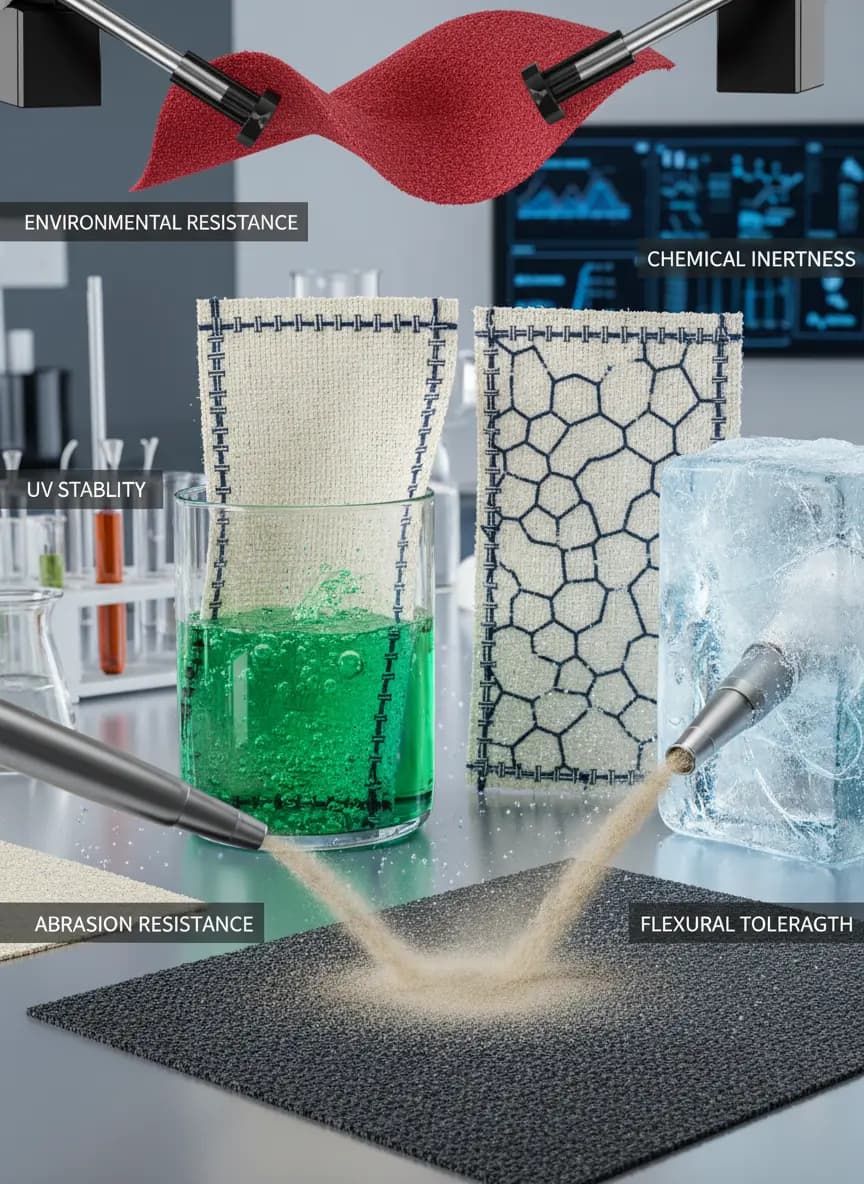
Environmental Resistance
For applications involving outdoor exposure or prolonged light exposure, UV-treated materials may be evaluated based on application requirements.
Functional characteristics are discussed during application review and are subject to technical feasibility and manufacturing alignment.
Material selection is guided by application fit and consistency, not by catalog breadth.
How Materials Are Selected
Material selection begins with how and where the material will be used, not with a predefined product list.
Key considerations include
- Application environment and intensity
- Surface interaction and sensitivity
- Performance consistency over repeat supply
- Operational and handling requirements
This approach supports predictable material behavior and reliable supply outcomes.
Spunlace vs. Needle Punched Non-Wovens
| Aspect | Spunlace Non-Wovens | Needle Punched Non-Wovens |
|---|---|---|
| Bonding Method | Hydro-entangled using high-pressure water jets | Mechanically bonded using barbed needles |
| Material Feel | Soft, flexible, fabric-like | Thicker, denser, more rigid |
| Primary Strength | Absorbency, flexibility, low lint | Durability, thickness, abrasion resistance |
| Typical Use Intensity | Light to heavy industrial cleaning | Heavy-duty and abrasive industrial use |
| Surface Interaction | Suitable for surface-sensitive cleaning | Suitable for rough or non-sensitive surfaces |
| Lint Characteristics | Low lint (application-dependent) | Not typically selected for low-lint needs |
| Reuse Expectation | Disposable or limited reuse (application-dependent) | Designed for extended or repeated use |
| Common Industrial Uses | Cleaning wipes, maintenance wiping, surface preparation | Heavy-duty wiping, utility cleaning, technical applications |
| Selection Priority | Cleaning performance and consistency | Structural strength and longevity |
| Typical Buyer Consideration | Consistency, absorbency, handling | Durability, resistance, mechanical strength |
Bonding Method
Spunlace Non-Wovens
Hydro-entangled using high-pressure water jets
Needle Punched Non-Wovens
Mechanically bonded using barbed needles
Material Feel
Spunlace Non-Wovens
Soft, flexible, fabric-like
Needle Punched Non-Wovens
Thicker, denser, more rigid
Primary Strength
Spunlace Non-Wovens
Absorbency, flexibility, low lint
Needle Punched Non-Wovens
Durability, thickness, abrasion resistance
Typical Use Intensity
Spunlace Non-Wovens
Light to heavy industrial cleaning
Needle Punched Non-Wovens
Heavy-duty and abrasive industrial use
Surface Interaction
Spunlace Non-Wovens
Suitable for surface-sensitive cleaning
Needle Punched Non-Wovens
Suitable for rough or non-sensitive surfaces
Lint Characteristics
Spunlace Non-Wovens
Low lint (application-dependent)
Needle Punched Non-Wovens
Not typically selected for low-lint needs
Reuse Expectation
Spunlace Non-Wovens
Disposable or limited reuse (application-dependent)
Needle Punched Non-Wovens
Designed for extended or repeated use
Common Industrial Uses
Spunlace Non-Wovens
Cleaning wipes, maintenance wiping, surface preparation
Needle Punched Non-Wovens
Heavy-duty wiping, utility cleaning, technical applications
Selection Priority
Spunlace Non-Wovens
Cleaning performance and consistency
Needle Punched Non-Wovens
Structural strength and longevity
Typical Buyer Consideration
Spunlace Non-Wovens
Consistency, absorbency, handling
Needle Punched Non-Wovens
Durability, resistance, mechanical strength
Sourcing Industrial Non-Woven Materials for Cleaning or Technical Applications?